
Company Incorporation
Our Singapore Company Incorporation Guides
Our Singapore Company Incorporation Guides
This guide explains how MOM COS 2026 signals on EP and S Pass qualifying salary increases can affect your 2027–2028 payroll budgets, renewals, and hiring timelines. You’ll learn where SMEs usually get caught (salary structure, documentation, timing) and how to plan in 2026 to avoid last-minute top-ups or rework.
Singapore’s 14.3% manufacturing jump in Nov 2025 is a planning signal for 2026: more orders often mean more hiring, transactions, and compliance workload. This guide shows what to review now—entity setup, accounting and tax rhythm, and payroll basics—so operations stay predictable as volume rises.
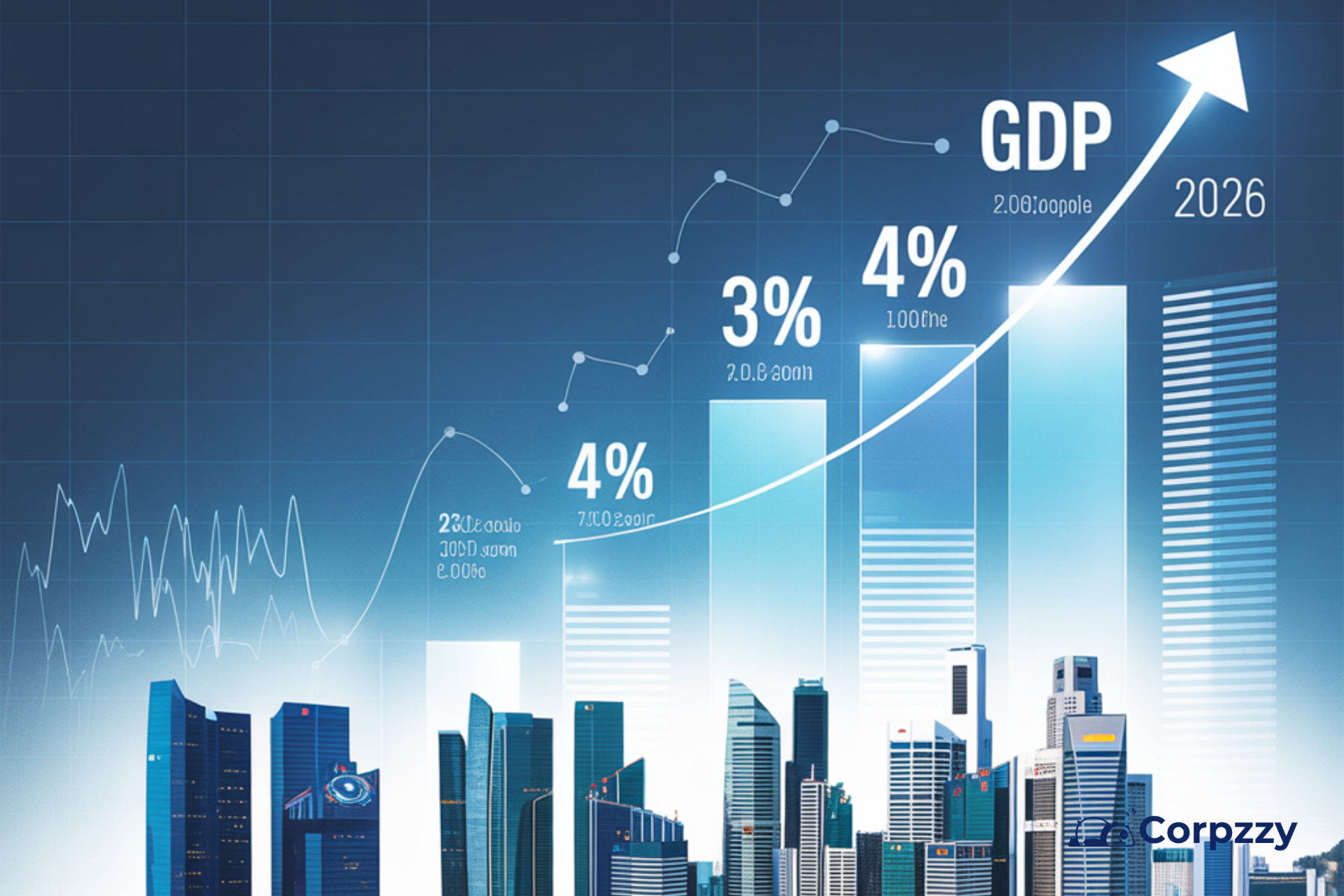
Singapore has raised its 2025 GDP forecast to around 4%, signalling a strong year ahead for business expansion and hiring. But with growth expected to slow sharply to 1–3% in 2026, SMEs must prepare early by strengthening cashflow, compliance, and operational efficiency.

Singapore’s wage growth is expected to moderate in 2026 — creating a rare opportunity for entrepreneurs to incorporate and scale their companies with lower manpower cost pressure. For Singapore locals and foreign founders, this shift offers a strategic window to build lean, compliant, and cost-efficient operations in one of Asia’s most competitive business hubs.

The Accounting and Corporate Regulatory Authority (ACRA) is Singapore’s primary body for regulating companies, overseeing business entity registrations and compliance. This article explores ACRA’s role, the Bizfile portal, and the steps businesses must take to ensure they meet all regulatory requirements.

Redomiciling allows businesses to transfer their legal domicile from one country to another without dissolving the company. This process ensures business continuity while providing the company with the benefits of a new jurisdiction, such as tax advantages and legal flexibility.
Corporate Governance
Our Singapore Company Secretary Guides
Our Singapore Company Secretary Guides
This guide explains how MOM COS 2026 signals on EP and S Pass qualifying salary increases can affect your 2027–2028 payroll budgets, renewals, and hiring timelines. You’ll learn where SMEs usually get caught (salary structure, documentation, timing) and how to plan in 2026 to avoid last-minute top-ups or rework.
Singapore Budget 2026 can shift your SME’s costs, tax outcomes, and compliance workload—often at the same time. This guide shows what to prepare before 12 Feb 2026 so you can update forecasts, payroll, and filings quickly without scrambling.
Singapore’s 14.3% manufacturing jump in Nov 2025 is a planning signal for 2026: more orders often mean more hiring, transactions, and compliance workload. This guide shows what to review now—entity setup, accounting and tax rhythm, and payroll basics—so operations stay predictable as volume rises.
This guide explains how MAS–China RMB and capital market initiatives can change day-to-day SME accounting, FX tracking, tax planning, and documentation in Singapore. You’ll learn what to tighten now so year-end closing and 2026 filings stay clean and predictable as RMB volumes grow.
Export orders are expected to increase in 2026, but many SMEs are not prepared for the payroll pressure that comes with scaling. This guide explains the compliance risks, MOM rules, and the operational fixes SMEs need before expanding.
EnterpriseSG’s Scale-Up Programme relies on accurate, up-to-date financials to diagnose an SME’s business model, cost structure, and scalability potential. Clearing accounting backlogs is essential for credibility, proper strategic planning, and ensuring consultants can deliver meaningful transformation results.
All Guides
Our Guides
Our Guides
This guide explains how the MAS Jan 2026 policy signal can show up in an SME’s costs, pricing, cash flow, and FX gains/losses—even if you don’t “trade currencies.” You’ll learn what to adjust in bookkeeping, management reporting, and tax/GST planning so year-end accounts are less surprising.
Learn how the Singapore–Taiwan tax agreement (now in force) changes practical withholding tax decisions and the documents IRAS may expect from YA 2026 onwards. This guide helps you avoid common issues like misclassified invoices, late withholding filings, and missing proof for treaty-based treatment.
Singapore Budget 2026 can shift your SME’s costs, tax outcomes, and compliance workload—often at the same time. This guide shows what to prepare before 12 Feb 2026 so you can update forecasts, payroll, and filings quickly without scrambling.
This guide explains how MOE’s 2025 announcements and the shift towards an ITE three-year curriculum may affect 2026–2027 internship timing, entry-level readiness, and pay expectations. You’ll learn how to budget full employment cost (including OT and CPF), structure step-up pay, and avoid common payroll setup mistakes.
If your business uses FX forwards, swaps, or commodity hedges, ACRA ED/2025/1 is a prompt to review whether your hedge accounting documentation and evidence will stand up to audit. This guide explains what to check in FY2025–2026 so you can avoid avoidable P&L volatility and last-minute reporting surprises.
ACRA’s 2026 reporting changes, including SFRS(I) 19 reduced disclosure for eligible subsidiaries, can affect how your group prepares statutory financial statements and handles disclosure notes. This guide helps founders plan early so 2026–2027 closes avoid last-minute rework, audit friction, and director sign-off stress.
This guide explains how MAS–China RMB and capital market initiatives can change day-to-day SME accounting, FX tracking, tax planning, and documentation in Singapore. You’ll learn what to tighten now so year-end closing and 2026 filings stay clean and predictable as RMB volumes grow.
Export orders are expected to increase in 2026, but many SMEs are not prepared for the payroll pressure that comes with scaling. This guide explains the compliance risks, MOM rules, and the operational fixes SMEs need before expanding.
EnterpriseSG’s Scale-Up Programme relies on accurate, up-to-date financials to diagnose an SME’s business model, cost structure, and scalability potential. Clearing accounting backlogs is essential for credibility, proper strategic planning, and ensuring consultants can deliver meaningful transformation results.